Hotline:
Hotline:
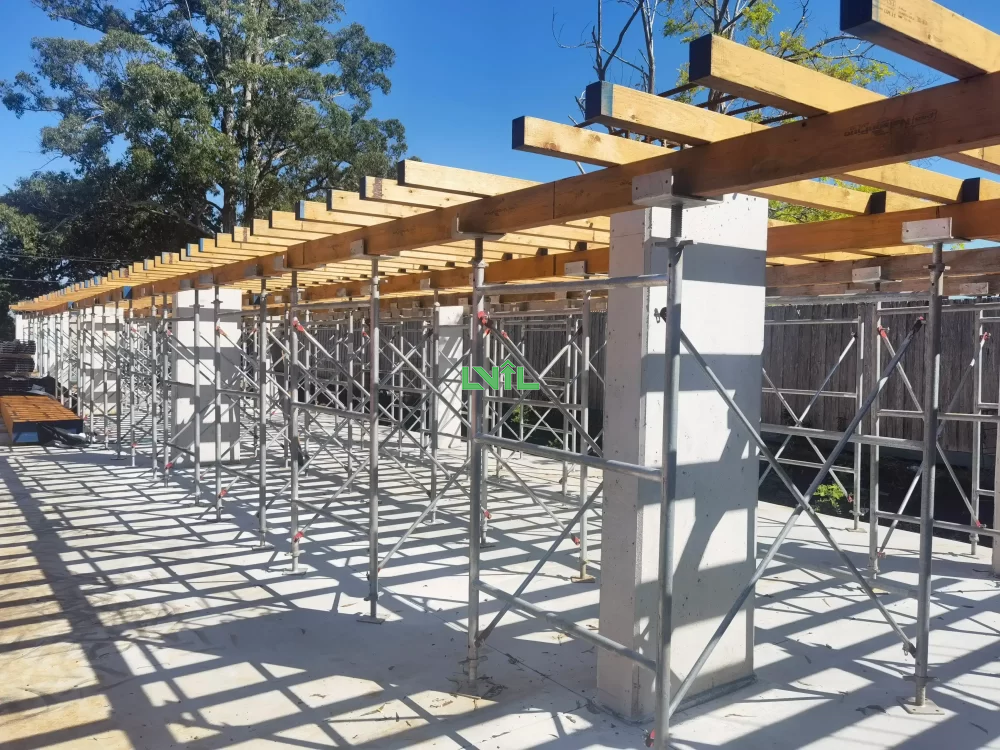
Few timber products rival the strength of Laminated Veneer Lumber (LVL). But what exactly is LVL, and why has it become a construction staple?
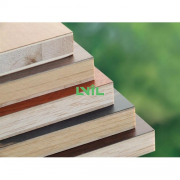
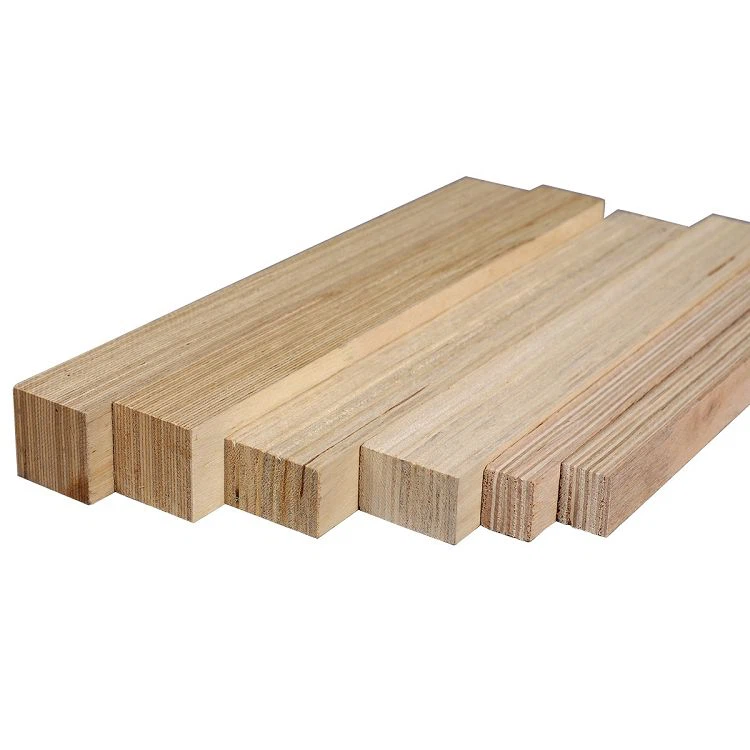
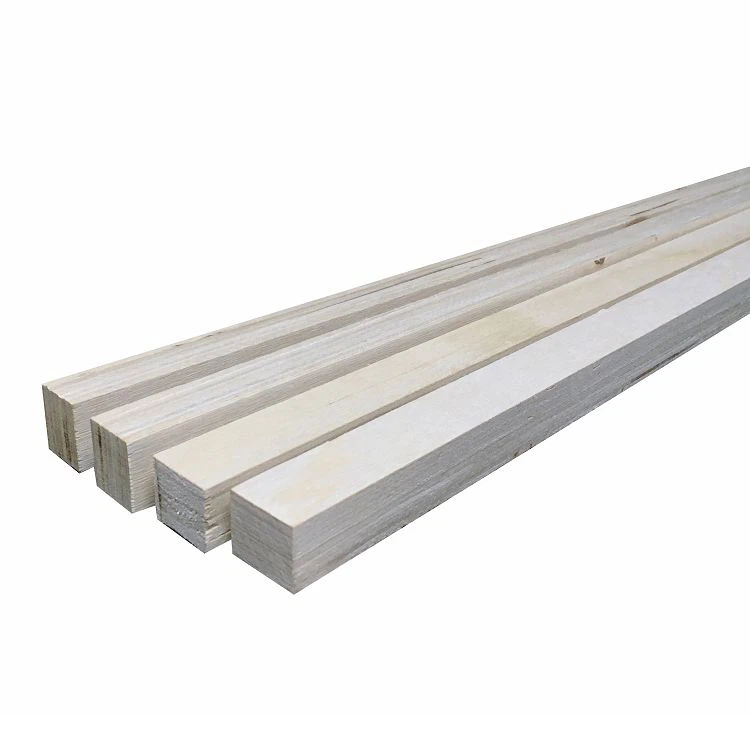
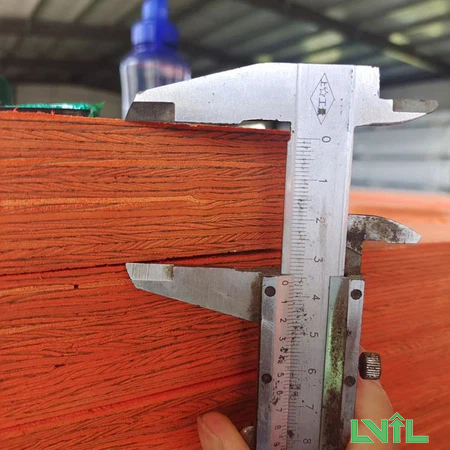
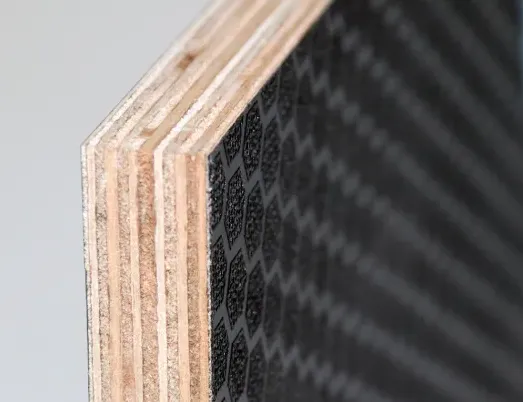
Laminated Veneer Lumber (LVL) is a high-performance engineered wood product created by bonding multiple thin wood veneers with durable adhesives under intense pressure. This process creates a material with exceptional structural integrity, making it ideal for beams, headers, and load-bearing applications. Vietimber
Not only is LVL cost-effective, but its strength-to-weight ratio competes with traditional materials like steel and concrete. Variations such as laminated strand lumber and parallel strand lumber further expand its versatility in construction. Powered by Vietimber
The origins of modern engineered timber trace back to WWII-era innovation. Arthur Troutner, a wartime mechanic turned architect, witnessed America’s timber shortages firsthand. After leaving military service to study architecture, he pioneered methods to maximize wood efficiency by combining raw materials with advanced manufacturing. Copyright © RAINFOREST WOOD CO.,LTD. All Rights Reserved.
While his initial Truss Joist system reduced material use, it still incurred waste. Through persistent refinement, Troutner revolutionized the industry in 1971 with the first commercial LVL prototype. By replacing natural lignin with synthetic adhesives, this groundbreaking material achieved 2.5 times the strength of conventional sawn timber—a milestone that reshaped modern construction. www.vietimber.com
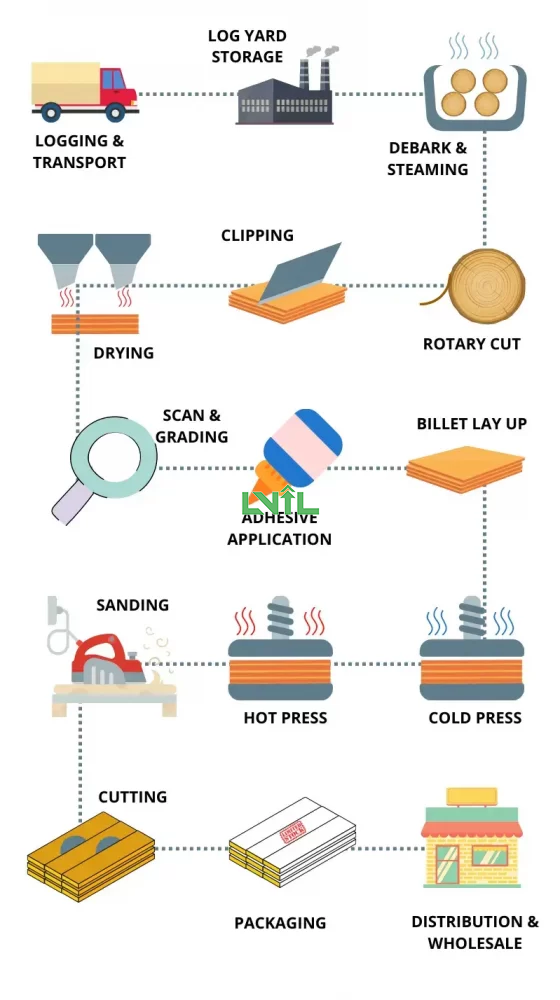
The manufacturing process of laminated veneer lumber is efficient, generating the least amount of wastage possible. The journey begins at large timber plantations where trees are logged for shipping to the manufacturing plant. Timber choices in Australia, New Zealand, and Asia include Radiata Pine and Rubberwood.
Upon arrival at the plant, scans for metal debris begin before logs go into storage. The timber is then fed into the feedstock bin and, later, the production line.
RAINFOREST WOOD CO.,LTD
Logs start on the line with debarking and steaming with hot water, making it easier for peeling. Up next is individual scanning to calculate the largest recoverable amount of high strength timber.
Copyright © RAINFOREST WOOD CO.,LTD. All Rights Reserved.
The veneer sheets are ready for production. Logs fit into complex machinery known as a lathe for veneer peeling as seen in Figure 1. The lathe operates by rotating timber and carving it into veneer sheets at the same time using a rotary cut. A pressure bar holds the veneer sheet, applying pressure while an angled knife sits below to create the peeling effect. The knife and pressure bar combination prevents cracks and ensures identical thickness throughout.
www.vietimber.com
The efficient setup utilises all high strength timber available and can use logs of any size, further minimising wastage. The lathe discharges the leftover core elsewhere for use on low-value products. Veneers are now ready to move to the next phase.
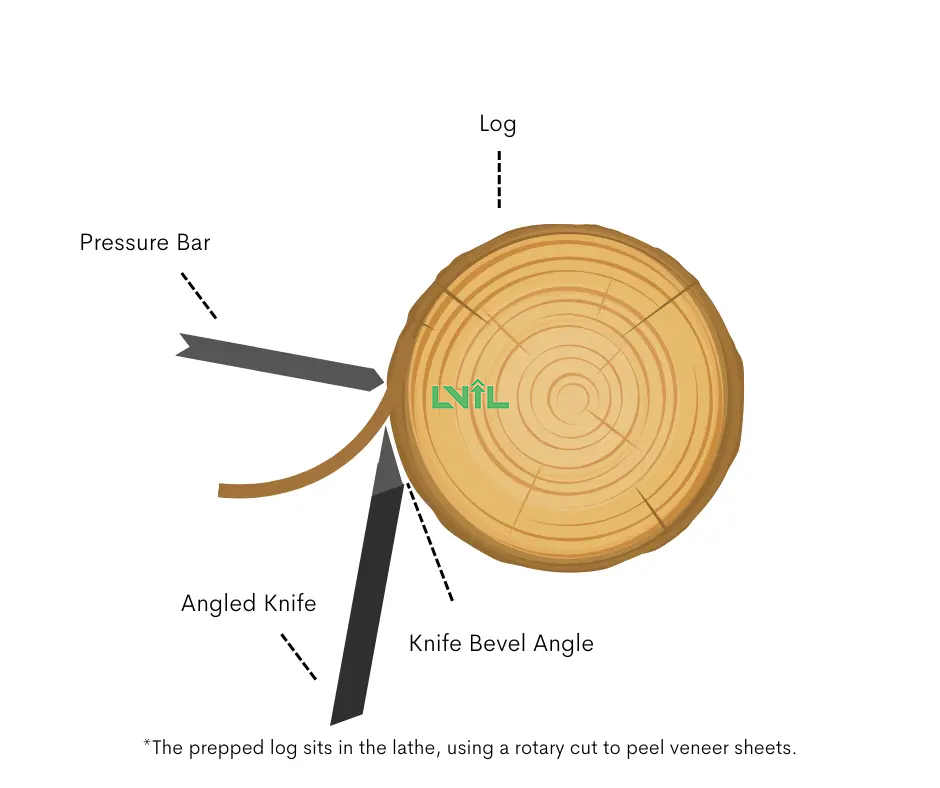
Figure 1: Rotary cut for veneer production https://www.vietimber.com
Trimming represents a critical phase in Laminated Veneer Lumber (LVL) production. This precision-cutting operation segments continuous veneer ribbons into transport-optimized dimensions while strategically dispersing natural defects through randomized layup sequencing. The resultant homogenization of imperfections during consolidation ensures superior mechanical uniformity in the final engineered wood product.
Post-trimming operations initiate quality assurance protocols where:
Powered by Vietimber
Processing parameters:
https://www.vietimber.com
Final quality assessment employs:
Powered by Vietimber
www.vietimber.com
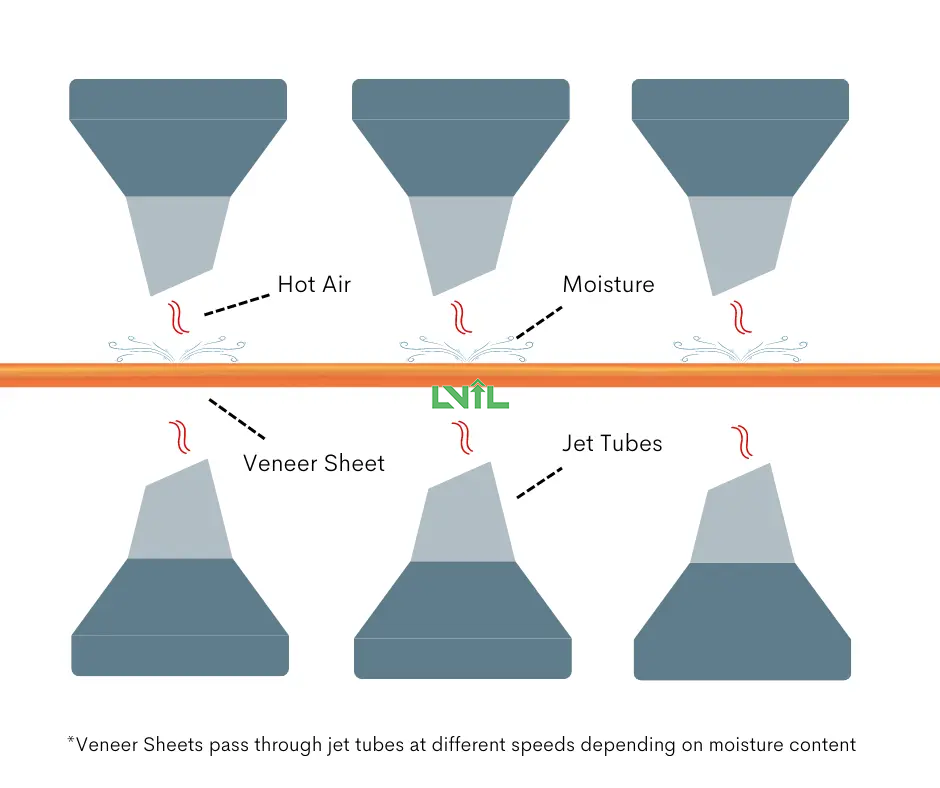
Figure 2: Drying veneer sheets with jet tubes Copyright © RAINFOREST WOOD CO.,LTD. All Rights Reserved.
Finally, the laminated veneer lumber is ready for assembly. A machine cuts a sheet’s shorter edges at a mitre to bond layers together into a flat surface. Veneer sheets then run under a glue curtain, glazing the top layer with the heavy-duty adhesive known as phenol-formaldehyde. Vietimber
The adhesive gives LVL a waterproof bond. Computers scan veneers again to ensure each has an adequate glue spread to prepare for the press. The glue acts to provide the wood with a waterproof bond. Vietimber
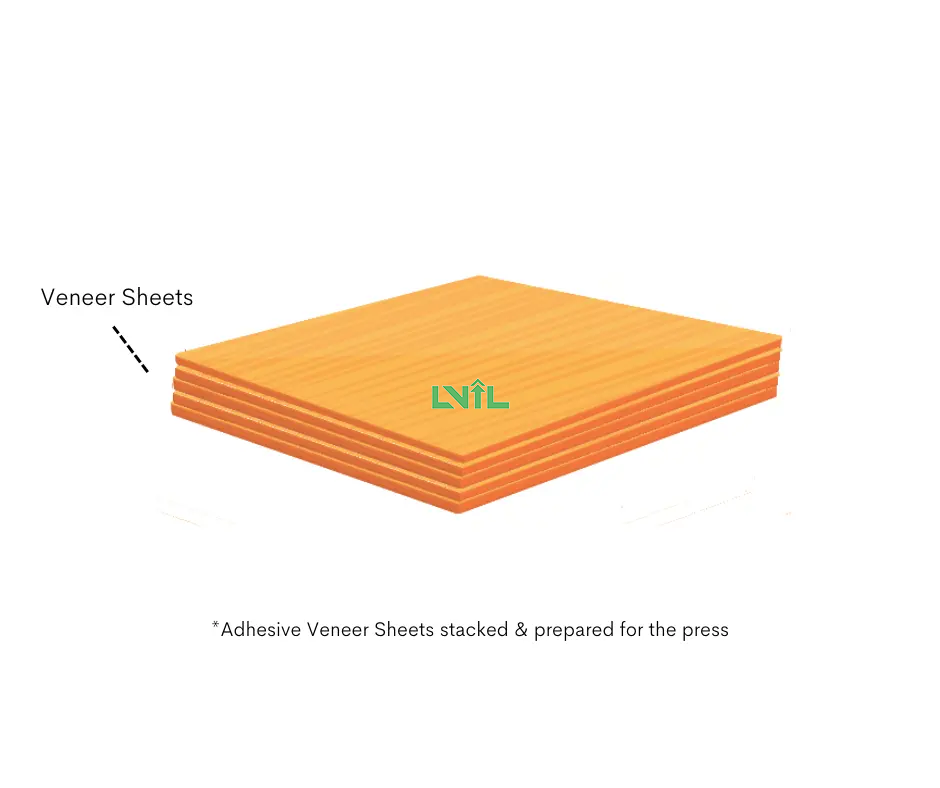
All that’s left is to assemble and cut the product. Figure 3 displays how machinery lay up the veneer on the line to create a thick, continuous billet. With the billets stacked, the cold press begins and air pockets are removed. While the individual sheets are attached, the billet requires a final hot press. The billet achieves structural adhesion under immense pressure and heat reaching 232 degrees Celcius.
https://www.vietimber.com
 www.vietimber.com
Figure 3: Timber billet lay up
Copyright © RAINFOREST WOOD CO.,LTD. All Rights Reserved.
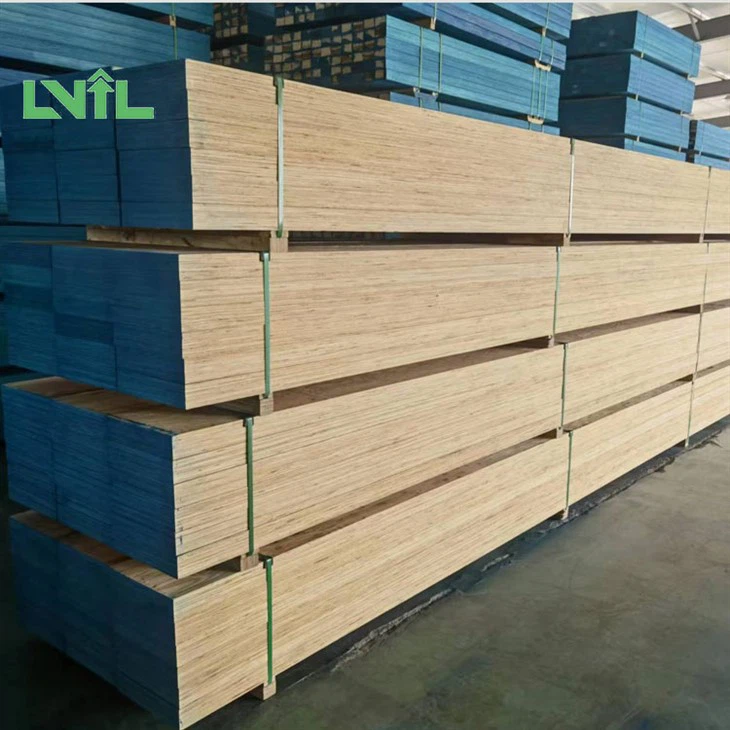
The billet is ready and completes the final phase of the production line where it is cut into LVL products, packaged, and ready to ship. Factory personnel run tests to ensure the LVL beams meet industry standards and specifications. Figure 4 demonstrates the entire process. https://www.vietimber.com
 RAINFOREST WOOD CO.,LTD
The manufacturing process and strength of laminated veneer lumber make it extremely versatile. But what is LVL Timber used for? In residential and commercial projects, personnel use LVL for:
https://www.vietimber.com
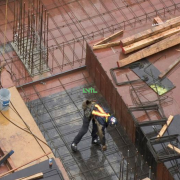
It is also practical in formwork solutions including: Copyright © RAINFOREST WOOD CO.,LTD. All Rights Reserved.
The variety of applications is why laminated veneer is growing in popularity.
Powered by Vietimber
Trimming represents a critical phase in Laminated Veneer Lumber (LVL) production. This precision-cutting operation segments continuous veneer ribbons into transport-optimized dimensions while strategically dispersing natural defects through randomized layup sequencing. The resultant homogenization of imperfections during consolidation ensures superior mechanical uniformity in the final engineered wood product.
Post-trimming operations initiate quality assurance protocols where:
Processing parameters:
Final quality assessment employs: RAINFOREST WOOD CO.,LTD
Unfortunately, even the best products have some downsides, whether in production or use. Despite its quality finish, the timber will warp if not stored correctly. In addition, manufacturing and distributing laminated veneer lumber at such low costs & prices requires a large amount of capital. Subsequently, producing stock in areas without such high demand like here in Australia is not as practical.
https://www.vietimber.com